Winter-ready insulated shipping container home in Canada

Shipping Container Home Insulation: Stay Warm Through Canadian Winters

Planning a container home for Atlantic Canada’s winters? We help you explore insulation and container modifications with warmth, moisture control and everyday comfort in mind.

A shipping container can become a comfortable year-round home, but its steel shell needs a different approach from a conventional wood-framed house. Steel moves heat quickly, and a small gap in an insulation system can create a cold spot where moisture collects.

We’ve supplied and modified shipping containers since 2007. Whether you’re considering a compact cottage or a permanent residence in Nova Scotia, New Brunswick or Prince Edward Island, we can help you discuss available insulation and modification options before your layout and finishes are finalized.

That’s why shipping container home insulation is about more than choosing a product with a high R-value.

Walls, roof, floor, windows, air sealing and ventilation all need to work together.

Winter comfort

Can Shipping Container Homes Stay Warm in Canadian Winters?

The challenge isn’t that steel containers can’t be insulated. It’s that heat can travel through exposed steel, including structural edges and connections, even when insulation covers the larger wall surfaces.

Yes—with a building envelope designed for year-round residential use, suitable heating and ventilation, and construction that meets applicable requirements.

A home may have insulated walls yet still feel drafty because of unsealed windows, an unprotected floor or gaps where the roof meets the walls. Those weak points can also create condensation risks.

We encourage you to think about the entire home rather than making the insulation decision in isolation.

Steel container walls being prepared for insulationSteel

Thermal bridging

Why Steel Containers Need Careful Insulation Detailing

Shipping containers have corrugated metal walls and steel framing. These components can create thermal bridges, allowing heat to bypass portions of an insulated assembly.

R-values describe resistance to heat flow, but a product’s stated R-value doesn’t tell the whole story about a finished wall. Installation, structural connections and air leakage affect actual performance.

The shape of the steel matters, too. Corrugations, corners and cut openings need suitable detailing so the insulation and air-control layers remain continuous.

Before selecting materials, it helps to understand where insulation will sit and how the wall or roof will manage moisture.

Insulation types

What’s the Best Insulation for Container Homes?

There is no single best insulation for container homes in every climate or configuration. The right approach depends on the complete assembly, local requirements, usable interior space, cost and intended occupancy.

Closed-Cell Spray Foam

Closed-cell spray polyurethane foam can follow the corrugated shape of steel and help reduce air movement when applied correctly. Depending on the product and thickness, it may also contribute to vapour control.

Those benefits make it worth considering for certain container projects, but installation quality matters. Thickness, substrate preparation, fire protection and compatibility with other materials require attention.

Rigid Foam Board

Rigid foam boards can provide a continuous layer of insulation in a properly detailed assembly. They may be considered on the interior, exterior or in combination with other materials.

Joints, penetrations and the transition around windows and doors need careful sealing. A poorly fitted board against corrugated steel can leave gaps that undermine the intended result.

Mineral Wool and Fibreglass

Mineral wool and fibreglass batts may work within suitably designed framed walls or roof assemblies. They do not, by themselves, provide a complete air barrier against a steel shell.

If indoor air reaches cold metal behind the insulation, moisture can accumulate. That makes air sealing, vapour control and the arrangement of materials especially important.

Which Option Should You Choose?

We help you discuss the modification scope and available insulation options. The final specification should reflect the complete wall, roof and floor assemblies, along with the applicable residential code and professional design requirements.

Discuss Your Container Home Insulation Options

Placement

Interior vs. Exterior Insulation: What Changes?

Hybrid systems are another possibility. The decision isn’t just about where insulation fits; it’s about how the assembly controls heat, air and moisture, and whether it can dry appropriately.

Interior

With interior insulation, we can preserve more of the container’s recognizable exterior, but insulation and finished walls reduce usable interior width. That trade-off matters when you’re planning cabinets, bedrooms or narrow circulation areas.
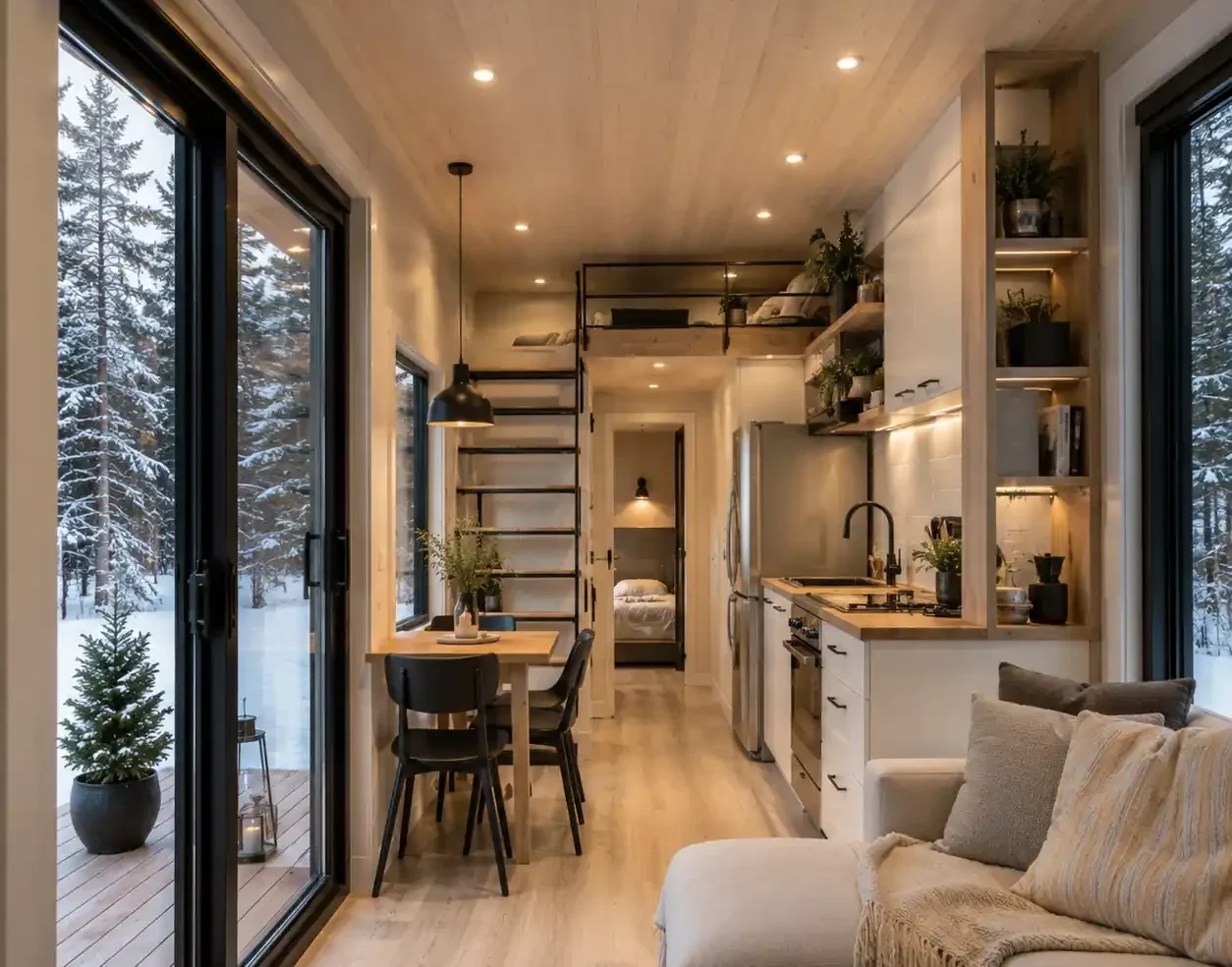
Finished interior walls inside an insulated container home
Exterior

Exterior insulation can reduce thermal bridging and preserve more interior space. It also changes how the container is clad and requires careful detailing around openings, roofs and connections.

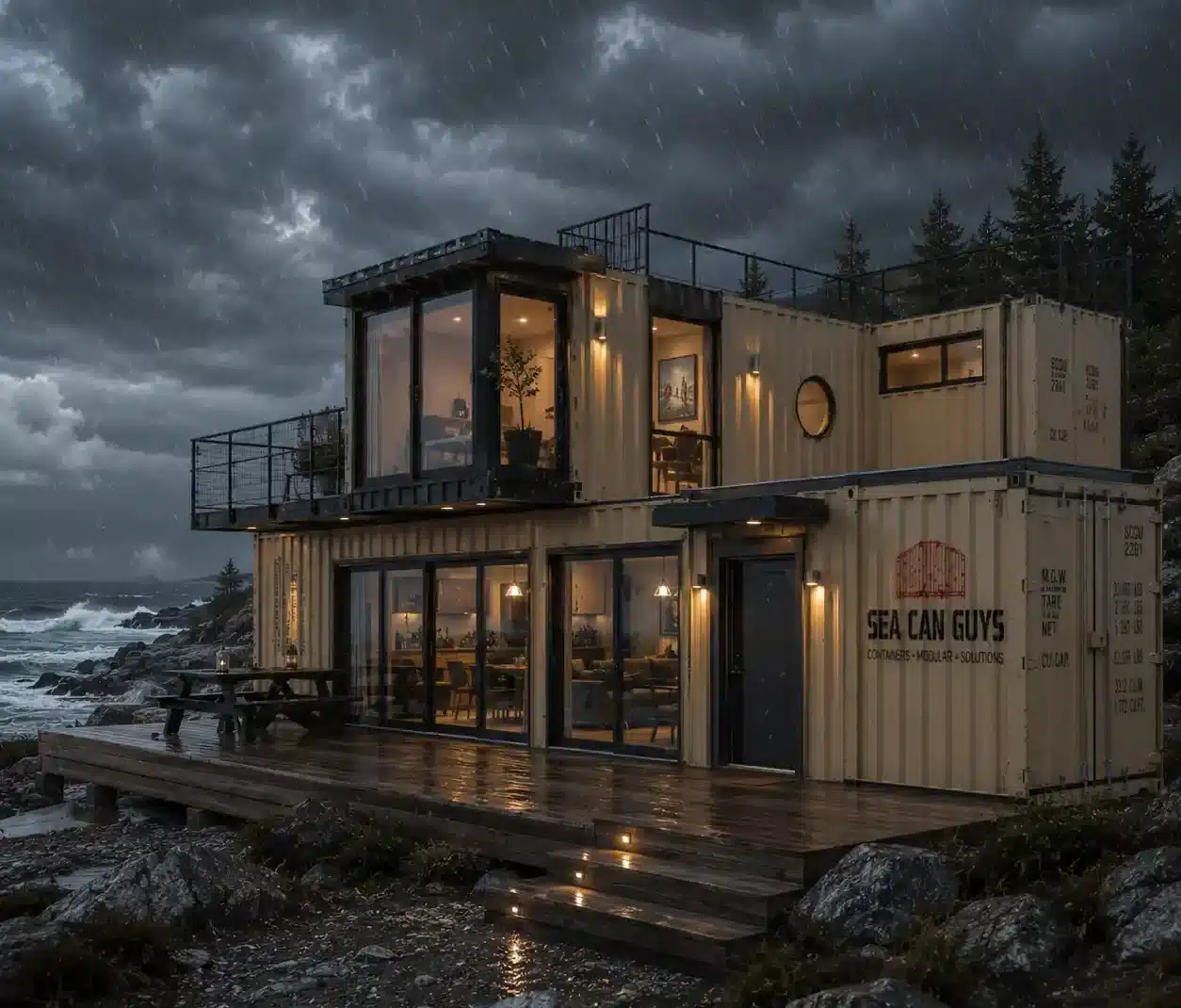
Clad exterior of a weather-resistant container home

Condensation

How Do You Prevent Condensation in a Container Home?

Condensation forms when moisture in the air meets a sufficiently cold surface. In a steel home, hidden condensation may develop if warm indoor air finds its way to unprotected metal.

Insulation can help keep interior surfaces warmer. But air sealing, vapour control and ventilation must be planned alongside it.

Cooking, showers and everyday living release moisture indoors. A suitable ventilation system helps replace stale air and manage humidity. Depending on the design, a heat recovery ventilator may be appropriate.

There is no universal vapour-barrier arrangement for every container conversion. The placement of materials must suit the insulation type, climate and complete wall assembly; adding another impermeable layer without considering drying potential may create problems.

We recommend addressing these details before closing the walls, rather than trying to correct persistent dampness after move-in.

Discuss Your Container Home Insulation Options

Building envelope

Don’t Overlook the Floor, Roof, Windows and Doors

Winter comfort depends on more than wall insulation.

Floors: An elevated container can be exposed to cold air underneath. Floor insulation, air sealing and freeze protection for plumbing should be coordinated with the foundation and site design.

Roof: Roof insulation and connections to the walls need continuity. Moisture detailing, drainage and any additional roofing system also require consideration.

Windows and doors: Appropriate glazing, insulated frames, weatherstripping and well-sealed openings can reduce drafts and unwanted heat loss.

We can discuss window, door and insulation modifications together so the residential layout doesn’t create avoidable complications later.

Discuss Your Container Home Insulation Options

Costs

How Much Does Shipping Container Home Winterization Cost?

The cost of insulating a container depends on its dimensions, the materials and thickness required, labour, the complexity of the assembly and whether the interior is already finished.

A complete winter-ready home may also involve upgraded windows, heating, ventilation, plumbing protection and roof or floor work. An insulation-only quote won’t capture those expenses.

Atlantic Canada250-350 CAD

For a wider budgeting reference, our general estimate for custom residential container construction in Atlantic Canada is 250-350 CAD per square foot. It includes structural framing, insulation, roofing, windows, doors and basic interior buildout. This is a broader home-construction estimate, not a price for insulation alone.

Land, site clearing and grading, foundations, water and septic connections, permits, inspections, driveways and landscaping are excluded. Delivery, placement and other project-specific requirements must also be confirmed separately.

We can discuss your intended size, location and residential modifications to help clarify what belongs in the project scope.

Request a Container Home Estimate
Container home built for a cold Atlantic Canadian climateCold climates

Cold climates

Planning Shipping Container Homes in Cold Climates

When evaluating shipping container homes in cold climates, we suggest starting with four practical questions: Will the home be occupied year-round? Where is the property? How much living space do you need? And which features—such as larger windows or connected containers—are important?

Answers to those questions influence insulation thickness, usable space, ventilation, heating and the details around structural openings.

In Atlantic Canada, winter cold, wind, rain and coastal humidity make those decisions particularly relevant. Your municipality and the proposed building use will also affect permits and construction requirements.

We began working with containers in Moncton, New Brunswick, in 2007. Today, our operations include multiple container modification facilities and a prefabricated-home facility in Hubley, Nova Scotia.

We can help you discuss container configurations and available residential modifications, while qualified professionals and local authorities determine project-specific engineering, building-envelope specifications and approvals. We review projects outside our primary Atlantic Canada market individually.

Get a Quote

Let’s Plan for a Comfortable Container Home

You don’t need to arrive with a finished insulation specification. Bring us your ideas, your proposed property location and a sense of how you want to use the home.

We’ll discuss the container size, layout and available modification options, including insulation, windows and doors. We’ll also help identify which details need further technical review before a final design or construction quote.

Insulation performance, ventilation, moisture control, engineering and code compliance depend on the complete design. Prices, modifications and service availability are subject to project-specific confirmation.

Trusted since 2007 Financing available Delivery across Atlantic Canada & beyond