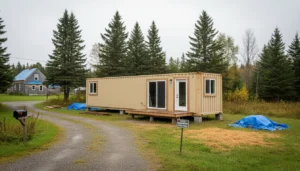

Our rapid-deployment shelters meet climate, code, and comfort standards without sacrificing response time.
Why Emergency Shelters Need a Better Standard in Atlantic Canada
Atlantic Canada has seen its fair share of disasters—winter storms, flooding, hurricanes, wildfires. And when a community is displaced, the pressure is immediate: people need shelter. But while most municipalities have plans, very few have ready-to-deploy shelter infrastructure built for our weather, population needs, and regulatory complexity.
The truth is, emergency shelters can’t just be fast—they need to be safe, accessible, durable, and code-compliant. And they need to do all that under pressure.
Sea Can Guys works with local governments, emergency management teams, and nonprofit organizations to design and deliver disaster relief shelters that meet real-world expectations in real time—without compromising on what communities need most.
Rapid Doesn’t Mean Risky: A Better Shelter Approach
It’s a common tension in emergency response: speed vs safety. Too often, emergency shelters are rushed onto sites without proper insulation, without ADA access, or without reliable heating—just to say they’re “there.”
But when the goal is to protect people, cutting corners is not an option.
That’s why our disaster relief shelters are built to:
- Deploy quickly to storm-affected or remote regions
- Withstand Atlantic Canadian winters and coastal exposure
- Meet provincial and municipal building codes
- Support accessibility and inclusivity for vulnerable populations
- Scale as needed, from small local response to multi-unit staging centers
We’ve spent the last 15+ years working with Canadian municipalities and response planners—so we know what works and what breaks under pressure.
Designed for Atlantic Weather, Built for Year-Round Use
Disaster shelters in this region can’t rely on fair weather. Atlantic Canada demands buildings that hold up to:
- Heavy snow and wind
- Freeze-thaw cycles
- Salt air near coastal towns
- High humidity and storms in summer
Our modular and container-based shelters are reinforced and insulated to perform in all seasons, including:
- Closed-cell spray foam insulation with high R-values
- Vapor barriers and weather-sealed entry points
- Exterior materials rated for corrosion resistance
- Windows and doors with thermal breaks and snow load ratings
- Optional HVAC integration for consistent heating and cooling
These aren’t just metal boxes with a heater. They’re purpose-built, comfortable shelters designed to work when the power’s out, the roads are closed, and families need security.

Accessibility Is Not Optional It’s Essential
Emergency shelters should protect everyone, including:
- Older adults
- People with mobility limitations
- Those with sensory, cognitive, or health challenges
Yet many temporary shelters don’t include ramps, accessible bathrooms, proper signage, or even basic privacy. This is a major gap—and it’s something local governments are increasingly expected to fix.
Our shelter designs include:
- Barrier-free entryways and internal layouts
- Accessible washroom modules with grab bars
- Wide doorways, ramp access, and non-slip surfaces
- Optional visual/auditory alerts for emergencies
We build to support inclusive sheltering policies—because communities aren’t complete unless everyone is considered.
Budget-Conscious Doesn’t Mean Bare Minimum
We understand the financial pressures emergency management departments face. Funding often comes from grants, emergency reserves, or time-limited programs. Our goal is to maximize what you get without inflating what you don’t need.
How we do it:
- Modular systems: Start small, scale up as needed
- Dual-purpose builds: Shelters can also serve as storage hubs or community centers during non-emergency times
- Transparent pricing: Full breakdowns of base units, optional upgrades, transport, and site setup
- Financing options: Access to flexible payment solutions through our commercial finance partners
You don’t need to overspend to be prepared—you just need a plan that starts smart and builds forward.
Compliance from Day One: Permits, Codes, and Municipal Red Tape
We’ve seen it happen—shelters get delivered, then stalled by local inspectors. Or they’re flagged for not meeting energy codes. Or zoning restrictions are misunderstood. That’s why our process always includes:
- Site and municipal zoning assessments
- Design to meet CSA-A277 modular construction standards
- Engineered stamped drawings where required
- Energy efficiency compliance (per provincial code)
- Guidance for obtaining permits and occupancy approvals
Sea Can Guys doesn’t leave you with a product that won’t pass. We deliver shelters that meet code before they ever hit the site.

From Ground to Deployment: We Handle the Hard Parts
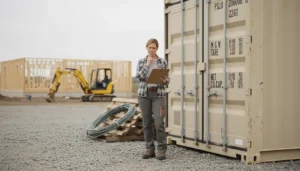
Installing an emergency shelter isn’t just about dropping a unit in place. It involves groundwork, logistics, utilities, and future servicing. We guide you through all of it.
Our services include:
- Site prep consulting: grading, access paths, drainage
- Foundation recommendations: pier blocks, slabs, skids
- Utility hookup coordination: power, water, septic where available
- Transport & crane services: delivering modules in any weather
- Ongoing maintenance plans: for multi-year durability
We’ve deployed containers in flood zones, rural villages, frozen parking lots—and we bring that experience into every project plan.
Flexibility That Scales with the Emergency
Every disaster is different. Some affect five families. Some displace hundreds. Some require long-term recovery support. That’s why our shelter systems are:
- Modular & expandable: Add units as needs grow
- Multi-purpose ready: Configure as housing, command centers, medical stations
- Stackable & relocatable: For tight sites or repeat use
- Off-grid capable: Solar, battery, or generator setups available
Your emergency shelter solution should adapt as fast as the crisis does. Ours can.
Proven Use Cases in Our Region
We’ve supported municipal clients and nonprofits throughout Atlantic Canada with shelter and emergency infrastructure that’s still in use today. Past examples include:
- Storm surge evacuation shelters for coastal towns
- Temporary warming centers for winter blackout periods
- Mobile medical hubs to support remote triage after wildfires
- Community storage/shelter combos for First Nations recovery support
We build relationships, not just boxes. That means follow-up, support, and honest answers long after the shelter is deployed.
Your Next Step: Let’s Build a Shelter Plan That Works
You don’t need to wait for the next disaster to be ready. Sea Can Guys helps you proactively plan, so when the time comes, you’re covered.
We’ll work with your:
- Emergency management team
- Municipal planning office
- Local contractors
- Funding contacts or grant writers
We’ll walk through every detail of the project: site, design, capacity, permits, timeline, pricing, and delivery logistics.
Contact Sea Can Guys
Sea Can Guys
Based in New Brunswick
(902) 579‑5833
seacanguy.ca
Serving: Atlantic Canada & surrounding areas