
Learn what the terms really mean, what to look for when buying, and how Sea Can Guys simplifies your container purchase in Atlantic Canada.
Why Knowing the Terms Helps You Buy Smart
In Atlantic Canada, buyers often encounter terms like “sea can,” “shipping container,” “C-can,” and “ISO container” used interchangeably. Understanding the labels helps you:
Identify legitimate maritime steel boxes versus repurposed storage units
Compare prices and specs accurately
Understand what each container’s condition and purpose truly mean
At Sea Can Guys, we specialize in authentic ISO-grade shipping containers—also known as sea cans in Canada—so you get exactly what you need, every time.
1. Availability & Price Fluctuation: Navigating a Tight Market
Demand in Atlantic Canada is high—especially in construction, marine, and DIY sectors. That means:
Scarcity during peak seasons—April through October
Price surges when supply dips
Listings range from $4,200–$4,500 CAD for a reliable 20‘ used sea can, while lower-priced offers frequently turn out to be scams or poor-quality units.
Sea Can Guys maintains a steady, year-round inventory, avoiding bait prices and delivering fair, transparent pricing. We update our website daily to reflect in-stock containers.
2. Scam-Wary Shopping: Protecting Yourself from Fake Deals
A too-good-to-be-true $3,000 sea can? That’s a red flag. Scammers post fake listings on platforms like Facebook and Kijiji, often disappearing after collecting money.
To stay safe:
Insist on seeing the container in person, or have a live video walkthrough
Ask for yard address, landline, and purchase receipt
With Sea Can Guys, you deal with a long-standing Atlantic Canadian business (est. 2007), complete with local yards, accountable staff, and verified testimonials.
3. Knowing What You’re Buying: Specs, Grades & Condition
If a listing says “used container,” ask:
Is it wind-and-watertight (WWT) or cargo-worthy (CW)?
Is the floor treated for chemicals or structural integrity?
Are dimensions standard (20’ or 40’) and doors working?
Listings often lack this clarity—leading to unpleasant surprises. We grade our containers clearly, show photos from all angles, and provide condition certificates upon request.
4. Delivery Details: Avoid Hidden Costs
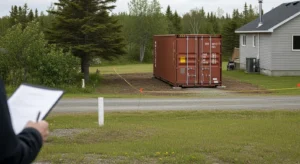
Delivery headaches are common—especially in rural or restricted-access areas in Atlantic Canada. Read your quote carefully:
Delivery and offload should be included in the initial price
Ask about site accessibility, elevations, and crane requirements
Request timelines and check for fuel or remote surcharges
Sea Can Guys delivers to your location—Nova Scotia, New Brunswick, PEI, Newfoundland—with predictable rates, comprehensive site assessment, and fast turnaround.

How We Solve These Pain Points for You
Pain Point | Sea Can Guys Solution |
Terminology confusion | We educate you with clear explanations and visuals |
Demand-driven price surges | We maintain local stock and fair pricing year-round |
Fake listings & scams | Physical yards, verified listings, real contacts |
Unclear specs & conditions | Transparent grading, inspections, documentation |
Hidden delivery costs | Flat-rate delivery with full site prep guidance |
Buyer’s Checklist: What to Look For
When you’re shopping for a sea can or shipping container, here’s what to check:
- Terminology: Confirm it’s an ISO shipping container, not a scrap bin
- Grade: WWT or CW with structural photos and condition report
- Pricing: Includes tax, delivery, and placement
- Supply: In-stock or on-order, with status updates
- Support: Local yard, live team, warranty or satisfaction policy
Sea Can Guys delivers on each point. We believe informed buyers make better choices.
Success Stories from Atlantic Canada
“Starting a professional football team, without a stadium to play in, was a daunting challenge—but thanks to the SeaCanGuys, we had a partner that helped me turn my vision into reality. Neil was by my side every step of the way and made sure we made it happen!”
Derek Martin, Founder, Owner & President
Halifax Wanderers Football Club
“We had a great vision, but tapping into the experience of Sea Can Guys helped bring our village to life within a really aggressive timeframe. The team was flexible, easy to work with, and provided great insight to make one of the most unique destinations in Canada come to life!”
Ray Gracewood
President, Area 506
These reflect our transparent habits, local support, and dependable delivery.
Why Partners Choose Sea Can Guys
We’re not a broker or reseller—we own, grade, and deliver our own containers. Our strengths:
- Local presence in Atlantic Canada for over 17 years
- In-house modification capabilities (painting, cutting, structural changes)
- Knowledgeable staff who speak your language and understand your site
- Easy financing via monthly plans tailored to container purchases
We make container buying simple, safe, and smart.
Ready to Buy a Sea Can or Shipping Container?
If you’re ready to shop with confidence:
- Browse our online inventory to see live stock
- Call us at (902) 579‑5833 with questions—or to lock in delivery
- Expect a steady, transparent, and informed experience
Let’s get your container delivered—without the stress that often comes with container shopping.