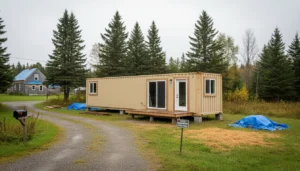

Real sea can house cost guidance, permit clarity, and weather-ready construction so you can move from research to a real plan.
If you’ve been researching sea can homes in Nova Scotia, New Brunswick, or Prince Edward Island, you’re likely running into a mix of inspiration photos and unclear answers.
The questions are practical:
What does a sea can house cost — really?
Are sea can houses legal where I live?
Will it handle Atlantic winters?
What’s included in the build, and what isn’t?
There’s growing interest in container-based housing across Atlantic Canada. Some buyers are looking for a more affordable path to homeownership. Others want a cottage, guest unit, or smaller footprint. Many simply want clarity before committing.
That’s what this page is built to provide.
What Does a Sea Can House Cost in Atlantic Canada?
Let’s start with the question that matters most.
The cost of sea can homes varies based on several key factors:
Size (single container vs. multi-container layout)
Interior finish level
Structural modifications
Site conditions
Foundation requirements
Utility connections
Delivery logistics
For a fully finished residential build, pricing typically falls within a per-square-foot range similar to specialized modular construction. But here’s where confusion usually begins.
Many buyers see a number online and assume that covers everything. In reality, that base build usually includes:
Structural framing and reinforcement
Insulation appropriate for Canadian climates
Roofing systems
Windows and exterior doors
Basic interior build-out
What is not typically included in base pricing:
Land purchase
Site clearing and grading
Foundation construction
Septic or water hookups
Electrical service connection
Permits and inspections
Driveways or landscaping
This is where trust is either built or lost.
The true sea can house cost depends heavily on site-specific variables. A rural property with easy access is very different from a tight urban lot or coastal build requiring special setbacks.
At Sea Can Guys, the goal isn’t to oversimplify pricing. It’s to identify the variables early so you’re not surprised later.
Real containers. Real pricing. Real next steps.

Are Sea Can Homes Legal in PEI, Nova Scotia & New Brunswick?
Short answer: yes — when built properly and approved through standard municipal processes.
The longer answer is where most buyers hesitate.
All sea can homes must comply with:
Local zoning bylaws
Provincial building codes
Inspection requirements
The container itself is simply a structural shell. Once converted into a dwelling, it must meet the same standards as traditional construction.
Where confusion arises:
Minimum square footage requirements
Zoning classifications (urban vs rural)
Setback rules
Foundation type requirements
Each municipality in Atlantic Canada has its own process. That doesn’t mean approval is difficult. It means planning matters.
Properly built seacan houses include:
Engineered reinforcements where walls are modified
Code-compliant insulation and vapor barriers
Approved electrical and plumbing systems
Proper foundation integration
When these elements are addressed upfront, permitting becomes procedural instead of stressful.
Steel construction isn’t the barrier.
Lack of planning is.
Can Sea Can Homes Handle Atlantic Winters?
This question is not optional in Atlantic Canada.
Nova Scotia, New Brunswick, and Prince Edward Island experience:
Freeze-thaw cycles
Coastal wind exposure
Snow loads
High humidity
Steel is durable. But without proper insulation and moisture management, any structure can become uncomfortable.
Well-built sea can homes designed for Atlantic climates include:
Closed-cell spray foam or high-performance insulation
Continuous vapor barriers
Thermal break strategies to reduce heat transfer
Ventilation systems for moisture control
Roofing and drainage systems designed for snow load
When insulated correctly, a sea can house performs comparably to many conventional homes.
The material is not the issue. Execution is. That’s why climate-specific construction matters more than aesthetics.
Structural Modifications: What Happens When You Cut Into a Container?
Shipping containers are engineered to carry heavy loads when stacked. Their strength comes from corner posts and structural sidewalls.
When converting them into homes, openings are cut for:
Windows
Doors
Interior expansions
Multi-container configurations
Without reinforcement, strength can be compromised. With proper engineering, structural integrity is maintained.
Professionally built seacan houses include:
Reinforced steel framing around new openings
Load-bearing support beams for open layouts
Structural calculations for stacked designs
This isn’t about cutting holes in a box. It’s about converting a steel structure into a code-compliant dwelling. That distinction matters.

Why Atlantic Buyers Are Considering Sea Can Homes
Across Atlantic Canada, housing costs have increased steadily. Build timelines for traditional construction can stretch long, and material pricing can fluctuate.
Buyers exploring sea can homes are often:
First-time buyers seeking affordability
Downsizers wanting efficient space
Cottage owners adding guest units
Property owners planning secondary dwellings
Families exploring alternative housing
The appeal is practical:
Modular foundation
Controlled fabrication environments
Durable steel structure
Efficient use of space
It’s not about building cheaply. It’s about building intentionally.
From Container to Completed Home: What the Process Looks Like
Clarity reduces hesitation. Here’s how most sea can homes move from concept to completion:
1. Planning & Scope Definition
Determine size, layout, and finish level.
2. Site Evaluation
Assess access, soil conditions, foundation requirements, and utility connections.
3. Design & Engineering
Finalize layout and ensure structural reinforcement is properly integrated.
4. Fabrication & Modification
Containers are modified in a controlled facility — not exposed to unpredictable site conditions.
Sea Can Guys operates multiple modification sites and a prefabricated home facility in Hubley, Nova Scotia. That regional infrastructure matters when building for Atlantic climates.
5. Delivery & Placement
The finished structure is transported and placed onto the foundation.
6. Utility Connections & Final Inspections
Electrical, plumbing, septic, and final approvals are completed. When the sequence is understood, the project feels manageable.

Built for Atlantic Canada
Sea Can Guys has operated in Atlantic Canada since 2007, with strong presence across:
Nova Scotia
New Brunswick
Prince Edward Island
Containers are inspected, wind and watertight, and modified with durability as the baseline.
Facilities in the region mean builds are designed for local weather realities — not imported assumptions.
Each sea can house is planned with:
Atlantic wind exposure in mind
Moisture control considerations
Snow load requirements
Transport logistics specific to regional roads and access points
Local experience changes outcomes.
Financing & Practical Pathways
For many buyers, affordability is about structure — not just sticker price. Flexible financing options are available for residential builds, helping spread costs over time.
When financing is transparent and build scope is defined early, momentum increases. Research becomes planning. Planning becomes progress.
Is a Sea Can Home Right for You?
A sea can home may make sense if you:
Want a smaller, efficient living space
Need a secondary dwelling or cottage unit
Value durable steel construction
Prefer modular-style planning
Want clearer cost structure before committing
It may not be ideal if:
You expect site development included in base build pricing
You want a large traditional suburban layout
You are unwilling to navigate municipal permitting
Every housing choice comes with trade-offs. The key is clarity.
The Difference Is Transparency
There are many photos online of container builds.
But photos don’t answer:
What will this cost on my land?
Will this pass inspection?
Will it be comfortable year-round?
How complex is delivery?
Clear answers build confidence.
That’s the difference between browsing and building.
If you’re researching sea can homes in Atlantic Canada, the next step isn’t guesswork.
It’s having a practical conversation about your property, goals, and budget.
Get a Realistic Sea Can Home Cost for Your Property
If you’re located in Nova Scotia, New Brunswick, or Prince Edward Island and want guidance tailored to your site:
Call 902-579-5833
or
Email the Sea Can Guys team to discuss your project
You can get clarity on:
Estimated sea can house cost range
What’s included in the base build
What depends on your site
Permitting considerations in your municipality
Delivery logistics for your region
From steel container to finished space — with clarity at every step.