Tiny House Canada: What Will It Really Cost?
Compare tiny homes, modular homes, prefab homes, and container-based options by build cost, delivery, site prep, permits, utilities, and winter-ready finishes.
If you are searching for tiny house Canada
you are likely trying to answer one important question first:
What will this actually cost?
A tiny home can look like a simpler, more attainable housing option at first. But the full cost often includes more than the structure itself. Delivery, site preparation, foundation work, permits, inspections, utility connections, winter-ready finishes, and customization can all affect the final number. We help buyers across PEI, Nova Scotia, and New Brunswick compare practical tiny home options, including tiny homes Canada, modular homes, prefab homes, and container-based housing.
For custom shipping container home builds in Atlantic Canada, estimated build costs typically range from $250–$350 per square foot. Final pricing depends on interior finishes, layout complexity, customization, and site readiness. That range gives you a helpful starting point, but it is not the full project cost. Land, clearing, grading, septic, water connections, foundation work, permits, and inspections are usually separate.
A Different Way to Think About Tiny Homes
Tiny house Canada can mean different things depending on the buyer.
Some people are looking for a small home on a foundation. Others are comparing tiny homes on wheels, modular homes, prefab homes, container homes, cabins, backyard suites, cottages, or secondary dwellings.
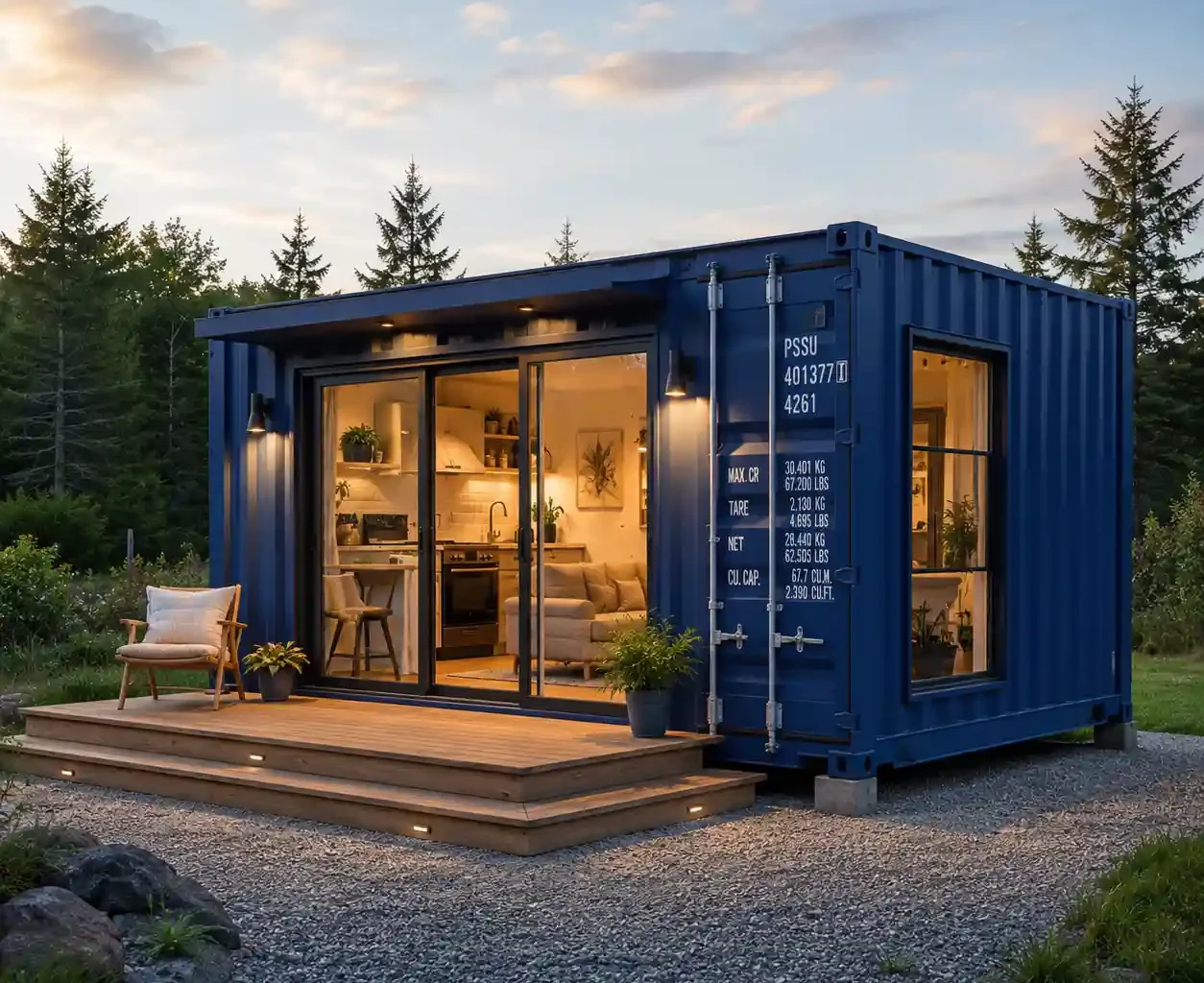
Our work focuses on container-based tiny homes and modular-style custom builds designed around real use. These spaces start with durable shipping container structures and are modified into functional living spaces based on the property, climate, layout, and intended purpose.
That can include a compact full-time home, cottage, guest space, rental unit, backyard suite, rural retreat, or seasonal living space.
The format may differ from a traditional tiny house, but the planning questions are often the same. What is included in the price? Can it be placed legally on the land? What site work is needed before delivery? Can it be used year-round? How will it handle Canadian winters? Can the layout be customized?
Those questions should be answered early, before design ideas or budget expectations become too fixed.
What Affects the Cost of a Tiny Home?
The cost of a tiny home depends on the build type, size, finish level, delivery location, site conditions, and amount of customization required.
For our custom shipping container home builds in Atlantic Canada, the estimated construction range is typically $250–$350 per square foot. This estimate applies to the construction of the container-based home itself and can vary based on selected finishes, layout complexity, and customization.
A simple seasonal unit will not cost the same as a fully finished year-round home. A backyard guest space will have different requirements than a full-time residence. A serviced property may involve fewer site costs than rural land that needs driveway access, foundation planning, septic, well, or electrical service.
When comparing tiny homes Canada, it helps to separate the budget into two parts: the home itself and the property work around it.
The home may include the structure, layout, insulation, windows, doors, interior finishes, heating considerations, kitchen and bathroom planning, storage, and exterior finishing.
The property may require land purchase, clearing, grading, foundation work, delivery access, septic, well, municipal water or sewer connections, electrical service, permits, inspections, driveways, and landscaping.
A clear quote should help you understand what is included, what may be separate, and what still needs to be confirmed based on your land.
What Is Not Included in the Build Estimate?
One of the most important things to understand is that a tiny home or container-based home estimate does not usually include every site-specific cost.
Our estimated $250–$350 per square foot range is meant to help buyers understand the likely construction cost for the shipping container home build itself. It does not typically include the property-related work needed to prepare the land or connect the home to services.
Common costs that may be separate include:
- Land acquisition
- Land clearing and grading
- Septic and water connections
- Foundation work
- Permits and inspections
- Driveways, landscaping, or other property improvements
- Utility hookups and service upgrades
These items can vary widely from one property to another.
A rural New Brunswick site may have different requirements than a coastal Nova Scotia property. A cottage lot in PEI may need different access, utility, or foundation planning than a serviced lot near town.
That is why we recommend starting with a detailed site assessment and design consultation. The more we understand about your land, layout goals, and intended use, the more accurate the pricing conversation becomes.
Why Base Prices Do Not Tell the Full Story
Many buyers start by comparing base prices. That can be useful, but it rarely gives the full picture.
A “starting at” price may not include delivery, site preparation, foundation work, utility connections, permits, inspections, or upgraded finishes. It may also assume a standard layout, easy delivery access, or limited customization.
That does not mean the price is wrong. It means the price may only represent one part of the project.
This is especially important in PEI, Nova Scotia, and New Brunswick, where properties can vary widely. A coastal lot may have different weather and foundation considerations than a wooded rural property. A cottage road may create delivery challenges. A serviced lot may still require local approvals, foundation planning, and utility coordination.
We help buyers look beyond the headline number. When you understand the structure cost, site cost, and custom choices separately, it becomes easier to compare tiny home options with confidence.
Can You Legally Live in a Tiny Home in Canada?
Legal placement is one of the biggest questions around tiny homes in Canada. Rules vary by municipality, property type, zoning, foundation, occupancy, utilities, and intended use. A tiny home may be treated differently depending on whether it is on wheels, placed on a foundation, used seasonally, used as a secondary dwelling, or intended as a full-time residence.
Before moving forward, buyers should confirm local requirements for zoning, permits, inspections, setbacks, foundation expectations, septic, water, electrical connections, and occupancy with the proper local authority. This matters whether you are planning a primary home, cottage, guest house, backyard suite, rental unit, or secondary dwelling.
We can help you prepare for those conversations by walking through the practical side of the project first. That includes intended use, delivery access, site readiness, foundation planning, utility needs, and customization goals.

Tiny Homes in Canada Need Winter-Ready Planning
A tiny home in Canada needs to be planned for more than square footage.
In Atlantic Canada, weather can include snow, rain, wind, salt air, moisture, freeze-thaw cycles, humid summers, and cold winters. A tiny home should be designed with insulation, ventilation, moisture control, heating, drainage, and long-term durability in mind.
Container-based tiny homes start with a strong steel structure, but livability comes from proper planning and modification. The home needs to be designed around how it will be used and where it will be placed.
A year-round tiny home needs different planning than a seasonal cottage. A coastal property may have different exposure concerns than an inland lot. A rental unit may need different durability choices than a private guest house.
We help buyers think through those details before the build path is finalized.
Tiny Homes, Modular Homes, Prefab Homes, and Container Homes
Many buyers searching for
tiny house Canada are comparing several housing paths at once.
A traditional tiny home may appeal to people who want a smaller footprint and less space to maintain. A modular home may offer a more structured build process. A prefab home may be partially or fully built off-site before being delivered and completed on the property. A container-based tiny home starts with a durable steel structure and is customized around a specific use.
Each option can make sense in the right situation.
A trailer-style tiny home may
be useful for some forms of mobility, but it can raise different questions around zoning, year-round comfort, and long-term placement. A container-based tiny home may be a practical option for buyers who want durability, customization, and a compact living space planned around Canadian conditions.
The right choice depends on your land, budget, intended use, comfort needs, and approval path.
We help buyers compare these options honestly so the build direction fits the property and long-term plan.
How Custom Can a Tiny Home Be?
Many buyers searching for tiny homes Canada do not want a one-size-fits-all layout. They want a small home that feels efficient, comfortable, and suited to the way they plan to live.
Customization can affect both the final layout and the final price. Interior finishes, windows, doors, insulation, exterior finishes, kitchen planning, bathroom planning, storage, heating, and layout complexity can all influence the final build cost.
The best place to start is with use. Will the space be used full-time or seasonally? Will it be a primary home, cottage, guest suite, rental unit, or backyard space? How many people will use it? Will it need a kitchen, bathroom, laundry, office, or extra storage? Does it need to work through winter? Will it be placed on rural land, a serviced lot, or a cottage property?
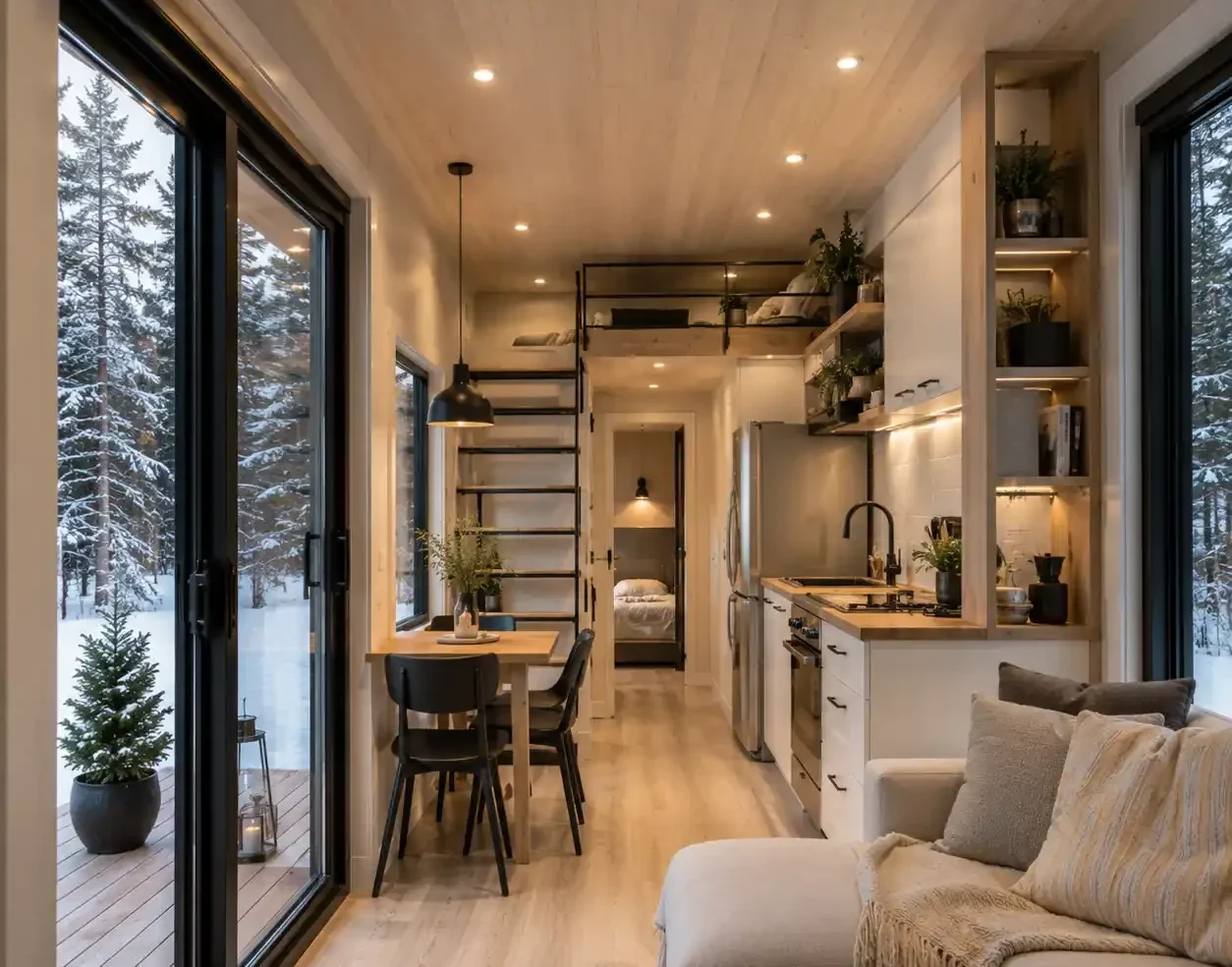
Once those answers are clear, it becomes easier to shape the build around real life instead of guessing from inspiration photos.
A Practical Option for Atlantic Canada Buyers
Tiny homes appeal to buyers who want a simpler, more intentional way to live. For some, the motivation is affordability. For others, it is less maintenance, a smaller footprint, a rural retreat, a guest space, a rental unit, or a way to make better use of land.
Container-based tiny homes can add another practical option for buyers who want durability, compact design, and a custom layout.
This approach may be a fit if you are planning a compact year-round home, a cottage or seasonal property, a guest house, a backyard suite, a rental unit, a secondary dwelling, a rural retreat, or a custom container-based living space.
The right fit depends on your property, budget, intended use, and local approval path. We help you think through those details before investing in design or site work.
Why Work With Us?
We have worked with shipping containers since 2007, helping customers across Atlantic Canada and beyond with container sales, rentals, modifications, storage units, offices, commercial projects, and residential container builds.
That experience matters when you are comparing tiny homes in Canada.
A container-based tiny home is more than a small structure. It is a site plan, a budget, a delivery process, a custom build, and a long-term decision. We understand how containers work, how modifications are planned, and what buyers should think through before moving forward.
We also understand that most buyers want clarity, not pressure. We help you compare options, understand what may affect pricing, think through site requirements, and decide whether a container-based tiny home is the right fit for your land and plans.
Serving PEI, Nova Scotia, and New Brunswick
We support buyers across PEI, Nova Scotia, and New Brunswick.
Regional experience matters because every property is different. A rural New Brunswick build may need different delivery and utility planning than a coastal Nova Scotia site or a cottage property in PEI. A serviced lot may be more straightforward than land that needs access, grading, septic, well, or electrical planning.
Whether you are planning near Moncton, Saint John, Halifax, Dartmouth, Antigonish, Sydney, Charlottetown, or a rural property outside a major centre, we can help you begin with the right questions.
Start With a Clear Tiny Home Plan
A tiny home can be a practical option, but the right decision starts with the full picture.
Before you compare prices, understand what is included. Before you choose a layout, think through the land. Before you commit to a build direction, confirm what your site may need, what local approvals may apply, and what level of winter readiness is required.
For custom shipping container home builds in Atlantic Canada, a typical construction range is \$250–\$350 per square foot, with final pricing based on finishes, layout complexity, customization, and site readiness.
If you are comparing tiny house Canada or tiny homes Canada in PEI, Nova Scotia, or New Brunswick, we can help you explore container-based tiny home options with a clear, practical approach.
Contact Sea Can Guys today
Call (902) 579-5833
Or submit a quote request through seacanguy.ca
From first inquiry to final placement — with clarity at every step.