Modular Homes in Atlantic Canada: What Will It Really Cost?
Get a clearer look at modular home pricing, site prep, delivery, permits, utilities, and custom build options in PEI, Nova Scotia, and New Brunswick.
When you start researching modular homes
The first question is usually cost. How much will the home be? What does the price include? What will the land need before the home arrives? What about permits, delivery, foundation work, utilities, and custom finishes?
Those are the right questions to ask.
At Sea Can Guys, we help buyers across Atlantic Canada explore practical, durable, container-based modular home options. Whether you are comparing modular home builders, looking into custom modular homes, or trying to understand whether a modular home could work on your land, we help you get a clearer picture before you move forward.
A modular home can be a smart path, but the real value comes from understanding the full project, not just the starting price.
A Practical Way to Think About Modular Homes
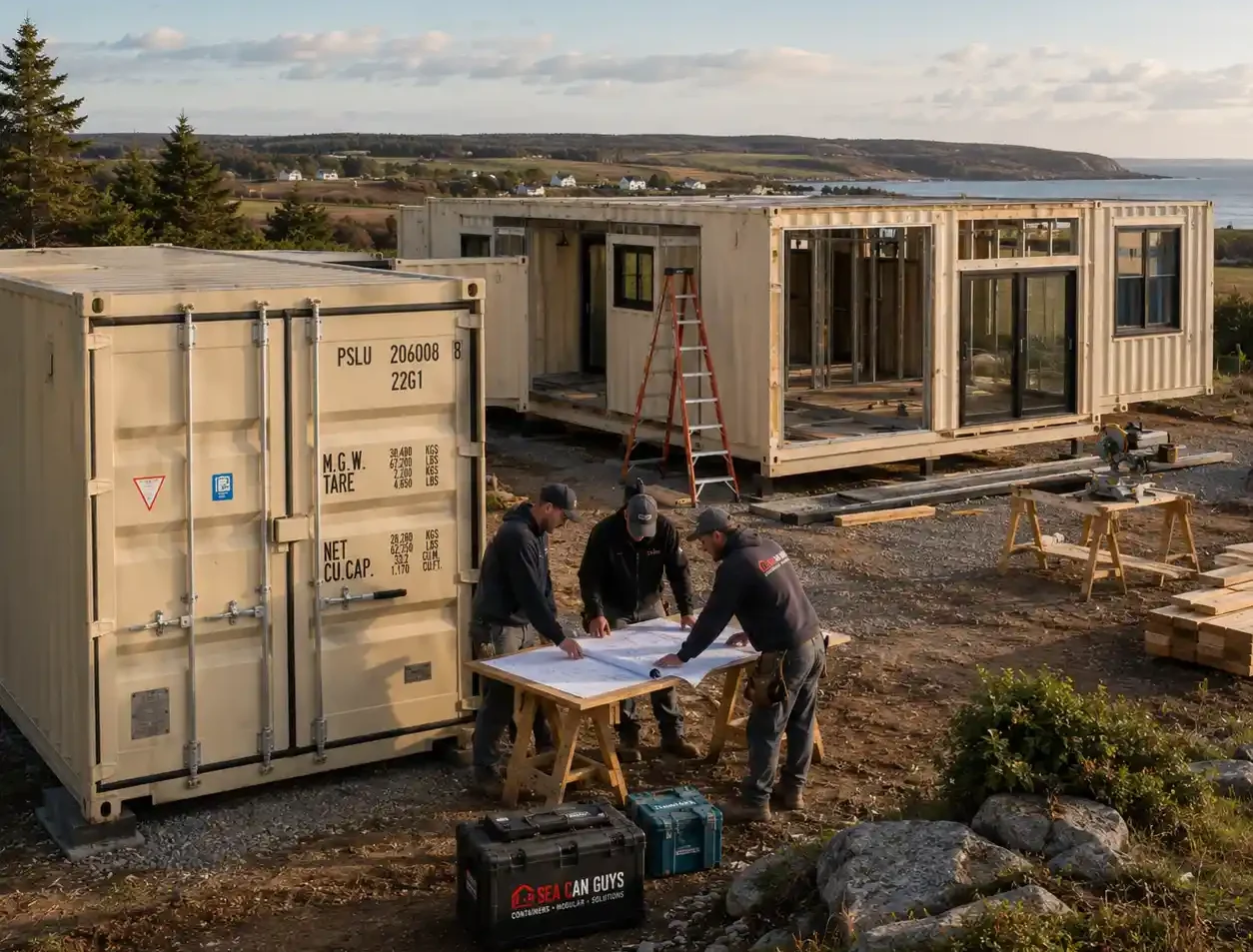
Modular homes appeal to many buyers because they can offer a more planned approach to building. Instead of managing every part of the process from scratch on-site, modular construction allows major parts of the structure to be prepared before arriving at the property.
For buyers in PEI, Nova Scotia, and New Brunswick, that can be especially helpful. Many properties involve rural access, changing weather, foundation considerations, utility planning, and local approval requirements. A more structured build process can make the early planning stage easier to understand.
Our work focuses on container-based modular homes. We start with durable steel shipping containers and customize them into functional spaces for residential, commercial, seasonal, and mixed-use needs.
That can include compact homes, cottages, guest spaces, backyard suites, rental units, offices, and other custom spaces designed around how you plan to use the property.
What Does a Modular Home Really Cost?
The cost of a modular home depends on more than the unit itself.
A useful estimate should help you understand what is included, what may be separate, and what could change depending on your site. Two modular homes can look similar online, but the final project cost may be very different once delivery, foundation work, permits, utilities, and finishes are considered.
When comparing modular homes, it helps to ask:
- What is included in the home package?
- What level of finishing is included?
- Is delivery part of the estimate?
- What foundation does the site require?
- Are permits and inspections included?
- What utility connections will be needed?
- How much customization is required?
These details can have a real impact on budget.
We help buyers look at modular home pricing with a practical lens. Instead of focusing only on a base number, we help you understand the major cost categories so you can make a more informed decision.
What May Not Be Included in a Modular Home Estimate
One of the most common surprises in modular home planning is that the estimate may not include every cost tied to the property.
The home and the site are different parts of the project.
Depending on your land, you may need to budget for clearing, grading, driveway access, foundation work, septic, well, water, sewer, electrical connections, permits, inspections, landscaping, and delivery preparation.
These costs are not always included in a modular home quote because they depend on the property itself.
That is especially important in Atlantic Canada. A rural lot in New Brunswick may need different access planning than a coastal property in Nova Scotia. A PEI property may have different municipal requirements than a lot outside Saint John, Moncton, Halifax, Dartmouth, Antigonish, Sydney, or Charlottetown.
We help you separate the home cost from the site cost so the conversation stays clear. That way, you can see what we can help with, what your property may require, and what questions should be answered before you commit to a build direction.
Built for Atlantic Canada Conditions
A modular home in Atlantic Canada needs to be planned for real conditions.
Our region deals with wet weather, wind, snow, freeze-thaw cycles, coastal exposure, and seasonal changes. A home should not only look good in a concept drawing. It should be designed with year-round use, comfort, durability, and placement in mind.
That is one reason buyers are interested in container-based modular homes. Shipping containers are built from strong steel and designed to handle demanding environments. When properly modified, insulated, finished, and placed, they can become practical structures for residential and mixed-use spaces.
We focus on function first. That means thinking through how the space will be used, where it will be located, how it will be accessed, and what the build needs to handle over time.
For some buyers, that means a compact year-round home. For others, it may mean a cottage, guest space, office, rental unit, or secondary dwelling.
Can You Build a Modular Home on Your Land?
Before choosing a modular home, it is important to understand what your land allows. Local zoning, setbacks, foundation requirements, occupancy rules, permits, inspections, and utility access can all affect whether a modular home is possible on a specific property.
This is where many buyers feel uncertain. You may like the idea of a modular home, but still need to know whether it can be placed on your land and what approvals may be required.
We always recommend checking with your municipality or local authority early in the process. Every area can have different requirements, and those details should be confirmed before finalizing the design.
We can help you prepare for that conversation by walking through the practical build considerations, including access, delivery, foundation planning, utility needs, and intended use.
Custom Modular Homes Designed Around Real Use
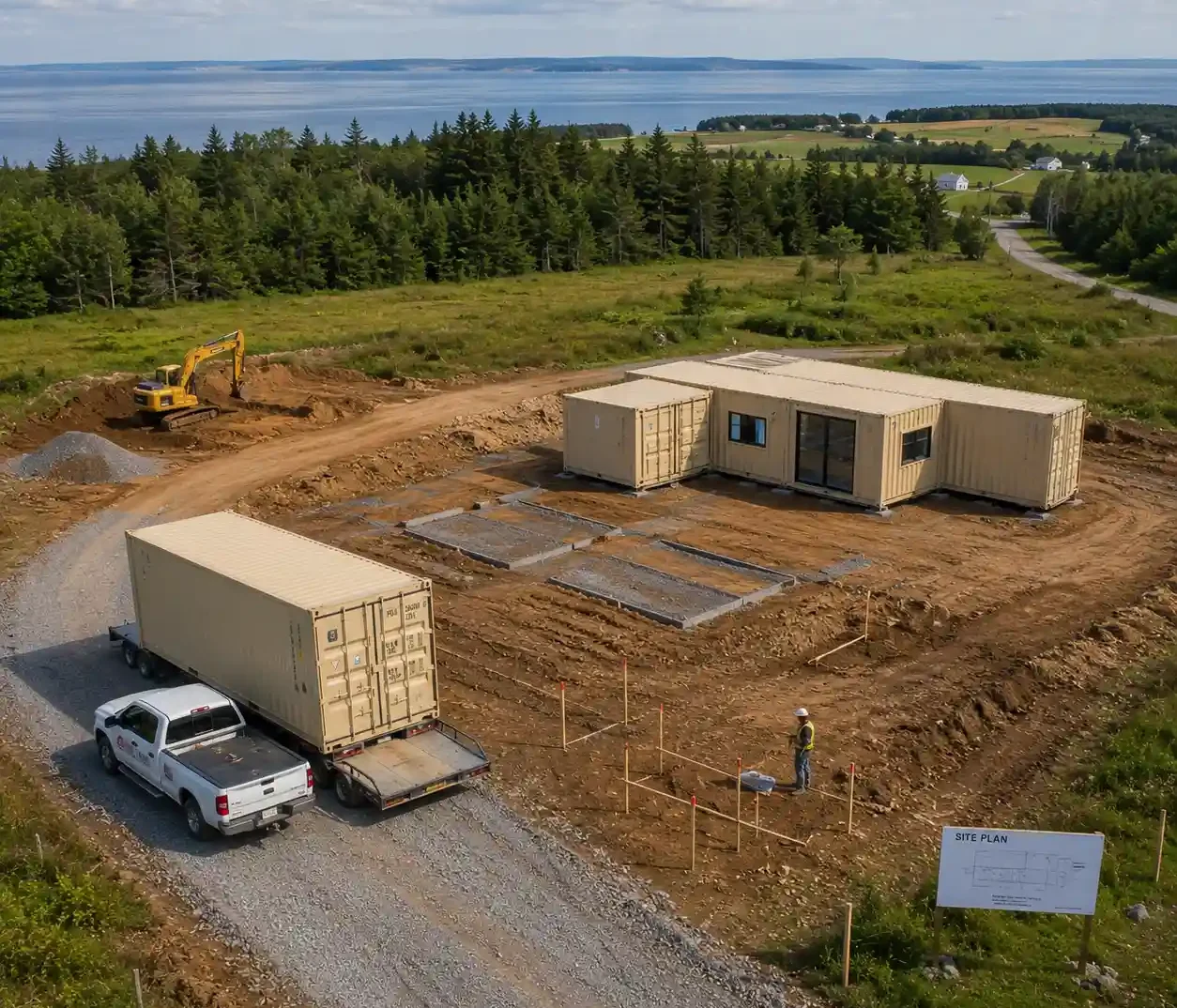
A custom modular home should start with the way you plan to live, work, host, rent, or relax in the space.
Before choosing finishes or layouts, we help you think through the practical questions:
- Will the space be used year-round or seasonally?
- Is it a full-time residence, cottage, guest suite, or rental unit?
- Does it need a kitchen, bathroom, laundry, storage, or office area?
- Will it be connected to existing utilities or planned for a more independent setup?
- What size makes sense for the property and budget?
These questions shape the build. Our custom modular homes can be planned around layout, insulation, windows, doors, heating, interior finishes, exterior finishes, and overall function. The goal is not to add complexity. The goal is to make smart choices early so the final space works the way you need it to.
How We Compare to Traditional Modular Home Builders
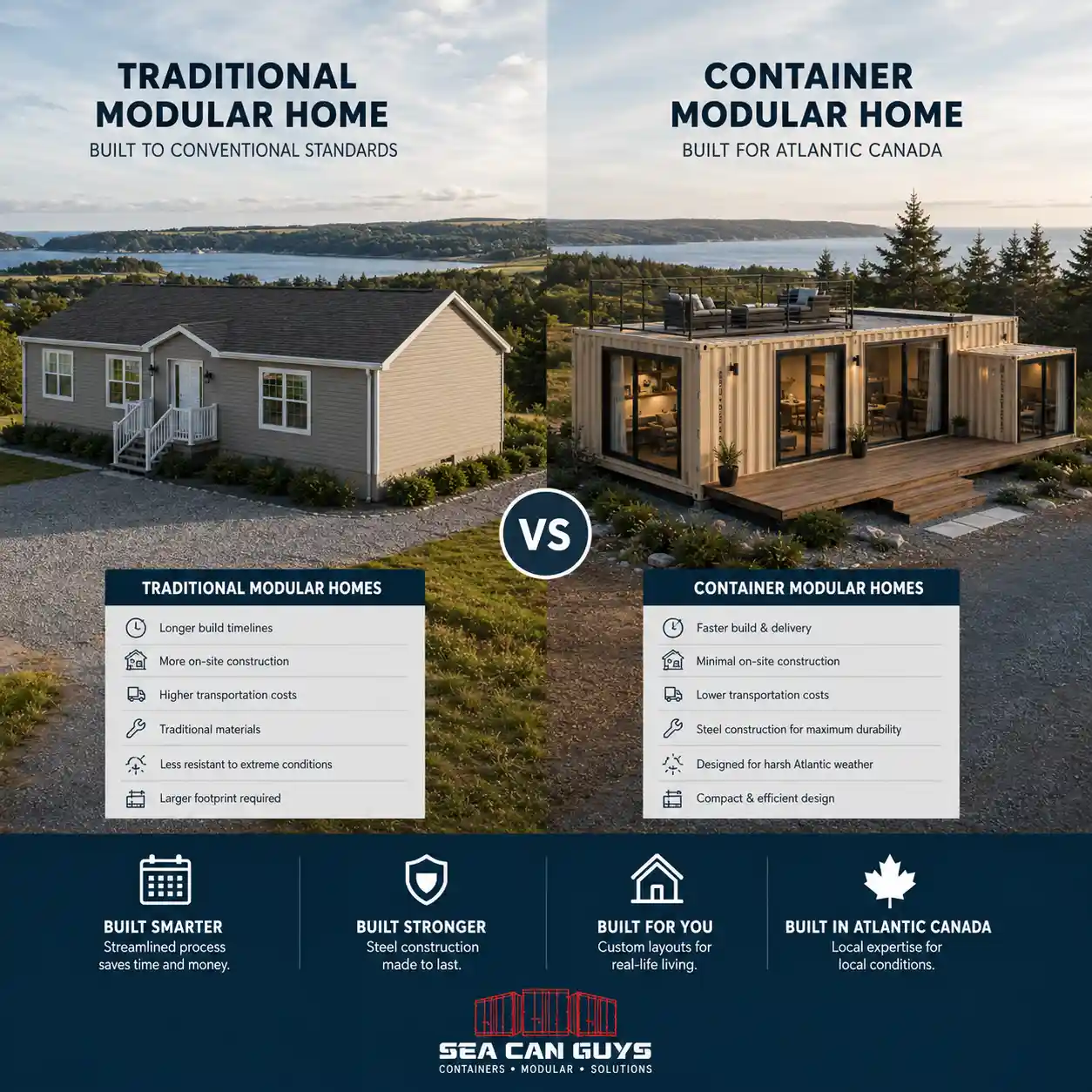
Traditional modular home builders often
focus on factory-built homes delivered in sections and completed on-site. That can be a good fit for buyers who want a more conventional home layout.
Our approach is different.
We specialize in container-based builds, modifications, and practical custom spaces. That gives buyers another option when they want something durable, compact, flexible, and built around a specific use.
Not every buyer needs the same kind of modular home. We help you understand whether a container-based option makes sense for your goals, property, and budget.
A container-based modular home may be a good fit if you are looking for:
- A compact home or secondary dwelling
- A cottage or seasonal retreat
- A guest suite or backyard space
- A rental unit or income property
- A rural or semi-rural build option
- A custom space with a durable steel structure
- A practical alternative to a conventional build
Planning Your Modular Home Budget
A clear modular home budget should look at the full project, not only the structure. We usually encourage buyers to think in five categories.
First the home itself
This includes size, layout, insulation, windows, doors, mechanical considerations, and finish level.
Second the site
This may include clearing, grading, driveway access, delivery access, drainage, and foundation planning.
Third utilities
Depending on the property, this may involve septic, well, municipal water, sewer, electrical service, heating, and other connections.
Fourth approvals
Permits, inspections, zoning, and local requirements should be confirmed before the project moves too far forward.
Fifth customization
Layout changes, upgraded finishes, additional openings, special features, and intended use can all affect the final cost.
Once these categories are separated, pricing becomes easier to understand. You can see what is part of the home, what depends on the property, and what choices may affect the budget.
Serving PEI, Nova Scotia, and New Brunswick
We work with buyers across Atlantic Canada, including PEI, Nova Scotia, and New Brunswick.
Regional experience matters when planning modular homes. Local weather, land access, rural servicing, coastal exposure, transportation, and municipal approval processes can all influence the project.
Whether you are planning near Moncton, Saint John, Halifax, Dartmouth, Antigonish, Sydney, Charlottetown, or a rural property outside a major centre, we can help you begin with the right questions.
A strong project starts with a clear conversation about the land, the intended use, the budget, and the build path.
Start With a Clear Modular Home Conversation
A modular home can be a practical option, but it should start with a realistic plan.
Before comparing prices, make sure you understand what is included. Before choosing a layout, think through the site. Before assuming a modular home can go on your land, confirm the local approval path. Before committing to a builder, make sure the structure, process, and budget fit the way you plan to use the space.
We help Atlantic Canada buyers explore container-based modular home options with a clear, straightforward approach.
If you are researching modular homes, comparing modular home builders, or looking into custom modular homes in PEI, Nova Scotia, or New Brunswick, we can help you understand what may be possible.
Contact Sea Can Guys today
Call (902) 579-5833
Or submit a quote request through seacanguy.ca
From first inquiry to final placement — with clarity at every step.