Sea Containers for Sale in Atlantic Canada: What Should You Expect to Pay?
Compare sea container pricing, sizes, condition, delivery, and storage options before you buy in PEI, Nova Scotia, or New Brunswick.
When you start looking for a sea container
price is usually the first question.
What should a sea container cost? Is a used container enough, or should you buy new? What size do you need? Can it be delivered to your property? Will it stay dry and secure through Atlantic Canada weather?
We help customers across PEI, Nova Scotia, and New Brunswick answer those questions before they buy. Whether you call it a sea container, sea can, C-can, or shipping container, our goal is simple: help you choose the right container for your property, storage needs, budget, and delivery location.
From residential storage and farm use to job sites, commercial inventory, and custom modifications, we can help you compare available options and understand what affects the final quote.
Sea Container, Sea Can, or Shipping Container: What’s the Difference?
In Atlantic Canada, people use different names for the same kind of product.
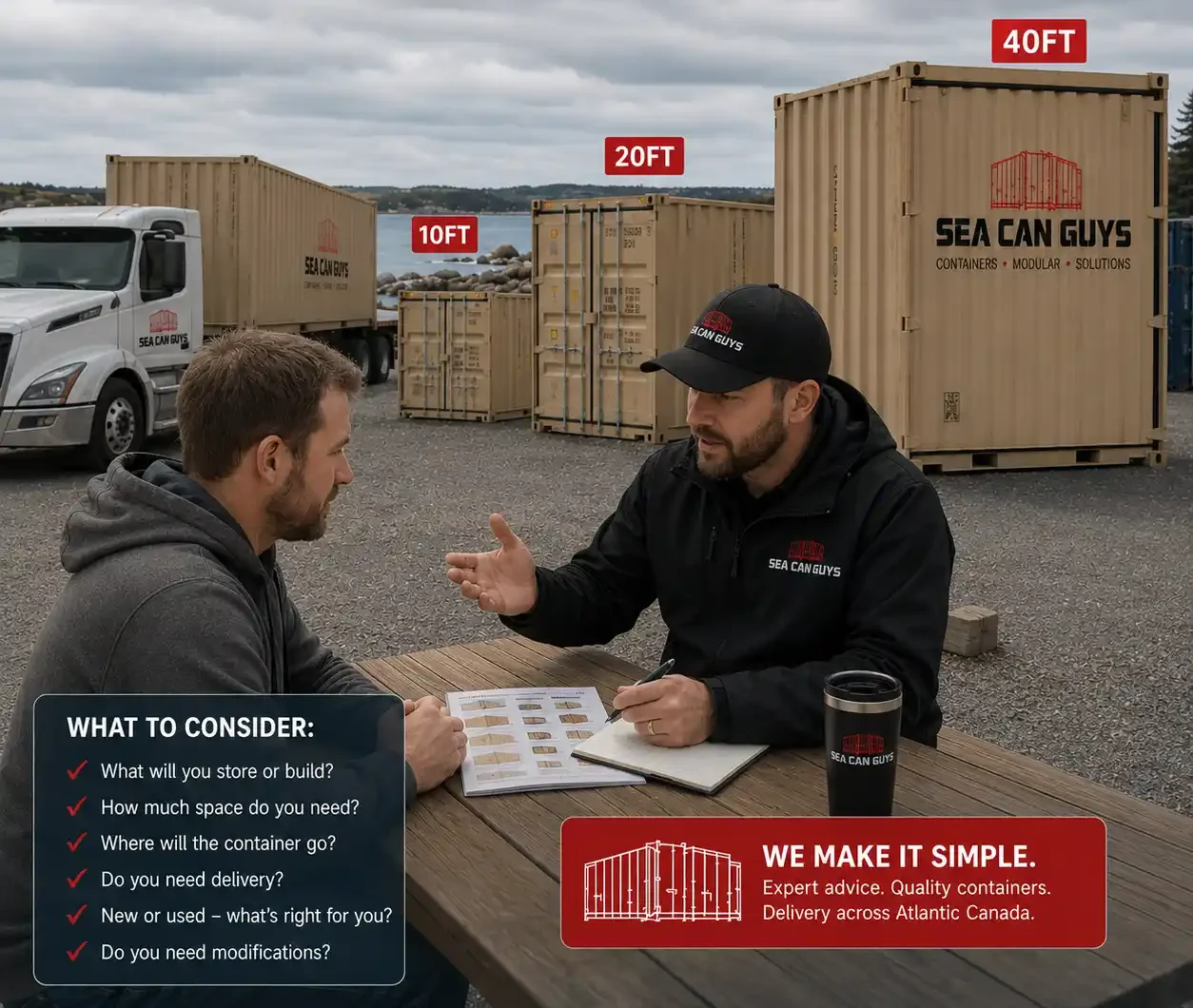
Some people search for sea container. Others say sea can, C-can, or shipping container. In most cases, they are referring to a durable steel container originally built for cargo transport and now widely used for secure storage, worksites, farms, cottages, businesses, and custom projects.
The name matters less than choosing the right container.
You need a unit that fits your space, protects what you are storing, can be delivered safely, and matches how long you plan to use it. You also need to know whether buying, renting, or modifying a container makes the most sense.
That is where we help. We walk you through the practical details so you can make a clear decision without guessing.
What Affects the Price of a Sea Container?
The price of a sea container depends on more than size alone.
A basic storage container will usually be priced differently than a modified unit, insulated container, site office, or container prepared for a custom project. Delivery distance, availability, condition, and placement needs can also affect the final quote.
The main cost factors include:
Size
Common options include 10 ft, 20 ft, and 40 ft containers. A larger container usually costs more, but it may offer stronger value if you need long-term storage or more usable space.
Condition
New and used containers come at different price points. A used sea container can be practical for storage, while a newer unit may be preferred when appearance or longer service life is a priority.
Availability
Inventory can shift based on location, size, and demand. Some container types may be easier to source than others.
Delivery location
A container going to a city lot, rural property, farm, job site, cottage, or commercial yard may require different delivery planning.
Modifications
Doors, windows, vents, insulation, shelving, electrical work, roll-up doors, and office conversions can all change the final cost.
A useful quote should make these details clear. Instead of comparing only the lowest number, it is better to understand what is included, what condition the container is in, and how the delivery will work.
Should You Buy a New or Used Sea Container?
The right choice depends on how you plan to use the container.
A used sea container is often a practical option for tools, equipment, construction materials, farm supplies, seasonal items, renovation storage, or commercial overflow inventory. When a used container is properly inspected and wind-and-watertight, it can provide reliable storage for years.
A newer sea container may be a better fit when appearance matters, when the unit will be placed in a visible customer-facing location, or when you want fewer signs of previous use.
Before choosing between new and used, it helps to ask a few simple questions:
- Will the container mainly be used for storage?
- Will customers, tenants, or staff see it regularly?
- How long do you plan to keep it?
- Does it need to look clean from the outside?
- Will it be modified later?
- How much space do you have for placement?
We help you choose based on real use, not assumptions. A sea can for a construction site may not need the same finish as a unit for a retail property, cottage, or custom project.
What Size Sea Container Do You Need?
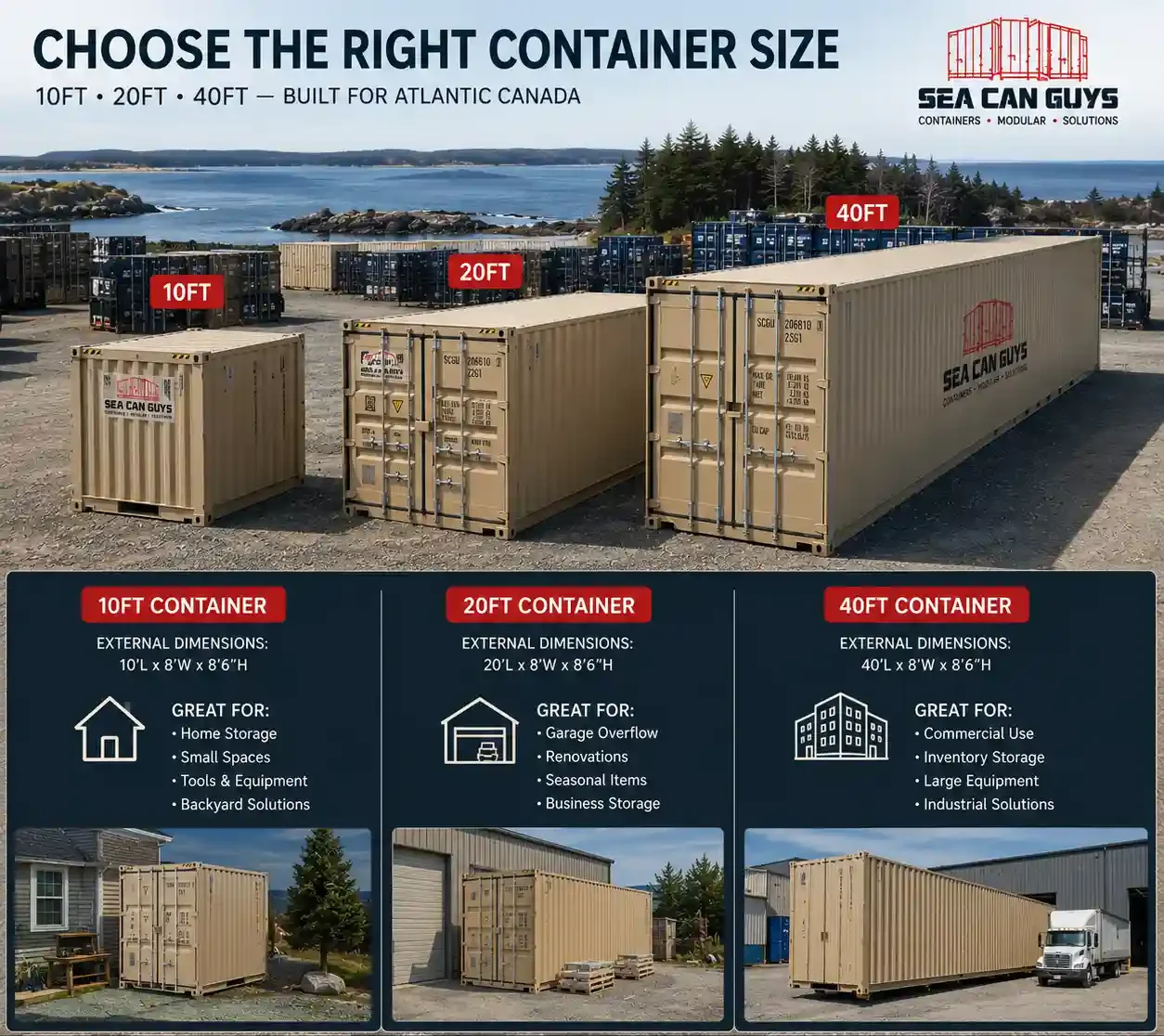
Choosing the right size is one of the most important parts of buying a sea container. A smaller unit may be easier to place on a tight property. A larger unit may be more cost-effective if you have the room and need more capacity. The right size depends on what you are storing, how often you need access, and how much space is available for delivery and placement.
10 ft sea container
A 10 ft sea container works well for smaller properties, residential storage, tools, seasonal items, or locations where space is limited.
20 ft sea container
A 20 ft sea container is one of the most common choices because it offers a useful balance of storage space, placement flexibility, and value. It can work well for homeowners, contractors, farms, cottage owners, and small businesses.
40 ft sea container
A 40 ft sea container is a strong option when you need more capacity for equipment, inventory, machinery, commercial storage, or larger property needs.
High cube sea container
A high cube sea container provides extra height, which can help when storing taller items or planning a modified container space.
Not sure which size fits? We can help you compare options before you commit.
Delivery and Placement Matter
Buying a sea container is not just about choosing the unit. Delivery and placement are part of the decision.
Before ordering, it is important to think through where the container will go and whether the site is ready. The delivery truck needs enough space to access the property, place the container, and leave safely.
A few site details can make a big difference:
- Is the driveway wide enough?
- Is the ground firm and level?
- Are there trees, wires, fences, buildings, or tight turns nearby?
- Will the container sit on gravel, blocks, pads, or another prepared surface?
- Is there enough room for the delivery truck to maneuver?
- Could weather affect access to the site?
These details matter across PEI, Nova Scotia, and New Brunswick, where delivery locations can range from urban lots and commercial yards to farms, rural roads, coastal properties, and cottage sites.
We help customers think through delivery early so there are fewer surprises when the container arrives.
Built for Storage in Atlantic Canada Weather
A sea can needs to handle real conditions
Atlantic Canada weather can bring heavy rain, snow, wind, coastal air, freeze-thaw cycles, and changing ground conditions. If you are storing tools, equipment, inventory, furniture, seasonal items, machinery, or building materials, you need the container to stay dry, secure, and practical over time.
That is why condition matters.
A good storage container should close properly, protect against the weather, and provide a secure space for what you need to store. Steel construction, solid doors, usable flooring, locking options, and proper placement all support long-term performance.
For farms, job sites
cottages, businesses, and residential properties, durability is one of the main reasons buyers choose sea containers. We help you choose a container that matches your setting, your use, and the level of protection you need.
Common Uses for Sea Containers
Sea containers are popular across Atlantic Canada because they solve practical space problems.
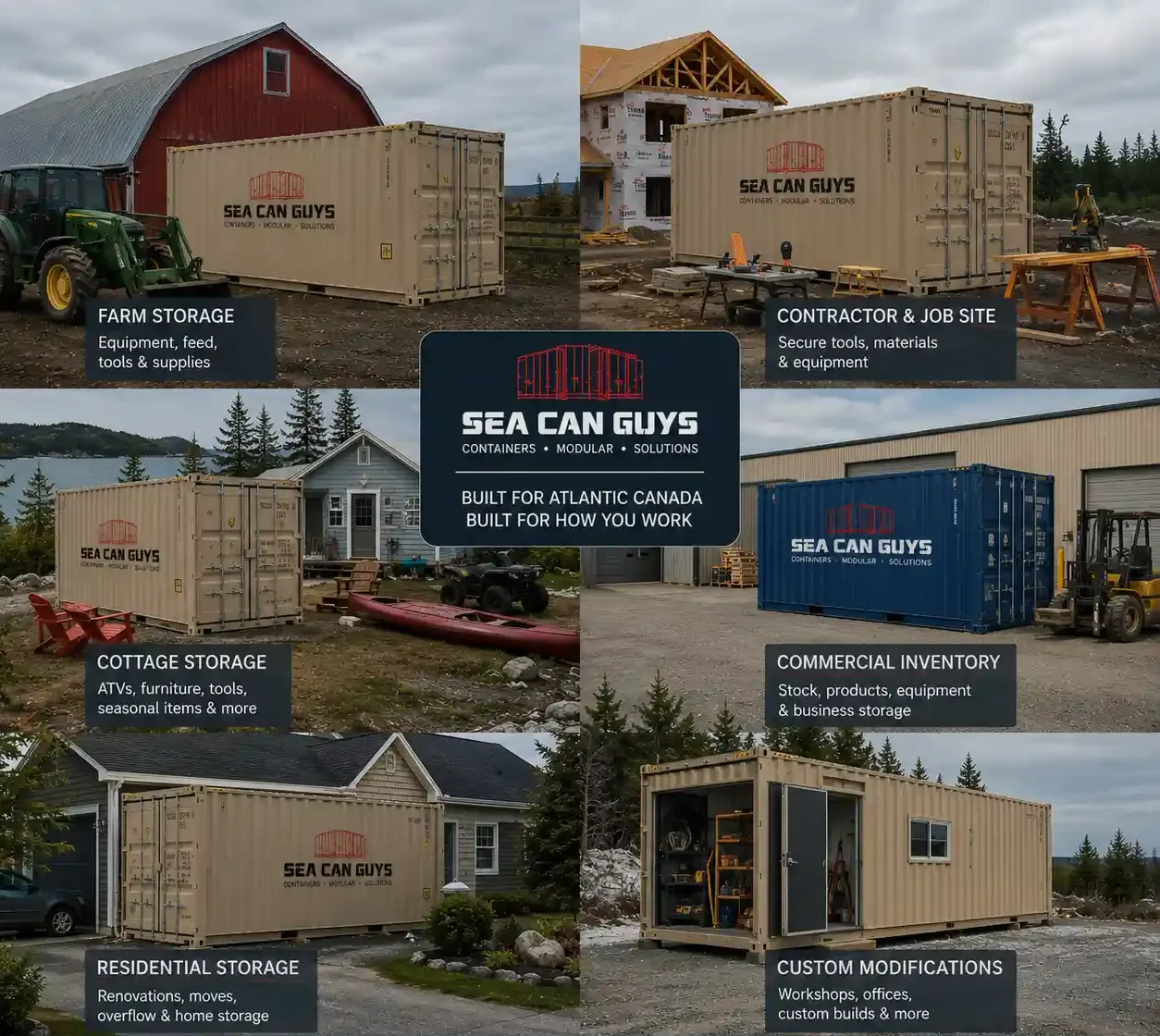
Homeowners use them
during renovations, moves, downsizing, garage overflow, and seasonal storage.
Contractors use them
to protect tools, materials, equipment, and job site supplies.
Farmers use them
for feed, parts, machinery, tools, and seasonal equipment.
Business owners use them
for inventory, records, supplies, equipment, and overflow stock.
Cottage owners use them
for ATVs, outdoor furniture, boats, tools, maintenance supplies, and seasonal property storage.
We also work with buyers who
use sea containers as the starting point for custom spaces, including offices, workshops, pop-up shops, retail units, storage solutions, and other modified builds.
That flexibility is one of the biggest advantages of a sea container. One structure can serve many different residential, commercial, agricultural, and industrial needs.
When a Custom Sea Container Makes Sense
A standard sea container is a strong choice for storage, but some projects need more than a basic unit.
Custom modifications can make a container easier to access, more comfortable to use, or better suited to a specific purpose. Depending on the project, that may include extra doors, roll-up doors, windows, vents, insulation, shelving, electrical planning, office layouts, or other custom features. A custom container may make sense if you need:
- A job site office
- A workshop
- A retail or pop-up space
- An insulated storage area
- A farm or equipment solution
- A storage unit with easier access
- A container prepared for a larger project
We start with how the container will be used. Once we understand the purpose, location, access needs, and any comfort or security requirements, we can help guide the next step.
Buy, Rent, or Modify : Which Option Fits?
Not every customer needs to buy a sea container outright.
Buying can make sense when you need long-term storage, want control over the unit, or plan to customize it.
Renting can be a better fit when you need temporary storage for a move, renovation, seasonal inventory, job site, or short-term project.
Modifying makes sense when a standard container does not fully solve the problem.
The easiest way to decide is to start with the use. How long do you need the container? What will go inside? Where will it be placed? Will you need regular access? Is appearance important? Do you need insulation, ventilation, shelving, electrical features, or extra doors?
Once those details are clear, we can help you compare the right path.
Sea Containers for Sale Across PEI, Nova Scotia, and New Brunswick
We work with residential, commercial, agricultural, and industrial customers across Atlantic Canada, including PEI, Nova Scotia, and New Brunswick.
Local experience matters when buying a container. Availability, delivery access, weather, ground conditions, site layout, and placement needs can all affect the process. A container going to a construction site in Moncton may require a different delivery conversation than one going to a cottage property in PEI or a business yard in Nova Scotia.
Whether you need one container for personal storage or multiple units for business use, we can help you compare size, condition, delivery, and modification options before you buy.
Start With a Clear Sea Container Quote
A sea container is a practical purchase, but the right choice depends on more than price alone.
Before you buy, make sure you understand the size, condition, delivery process, placement requirements, and whether a standard or modified container is the right fit.
We help customers across PEI, Nova Scotia, and New Brunswick compare sea containers for sale with clear guidance and practical next steps. Whether you call it a sea container, sea can, C-can, or shipping container, we can help you find the right option for your storage, job site, farm, cottage, business, or custom project.
Contact Sea Can Guys today
Call (902) 579-5833
Or submit a quote request through seacanguy.ca
From first inquiry to final placement — with clarity at every step.